The things that come up in practice: reject rates, stock, standards, sizing, and the parts of this category that are poorly explained everywhere else. Written to stay useful, so nothing here is dated.
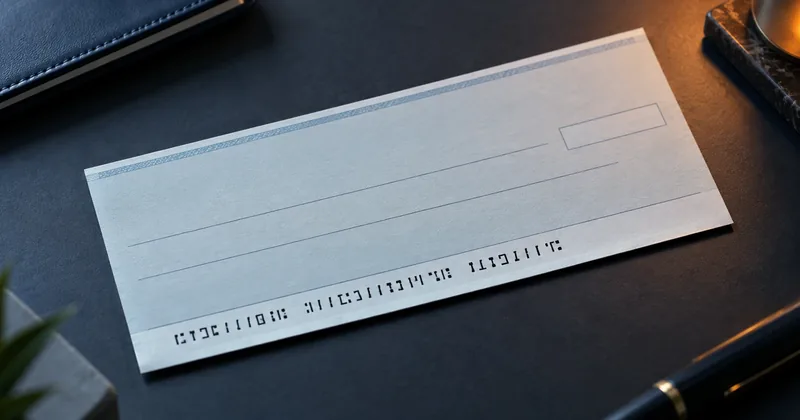
MICR is magnetic ink character recognition: a reader/sorter magnetizes the ink on the bottom line of a check and compares the waveform against a standard. Here is how the read works, what the line carries, and why a magnetic read survives handling that would defeat an optical one.
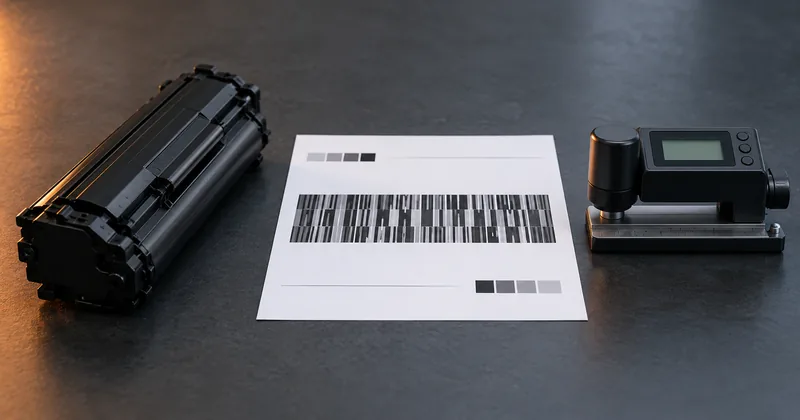
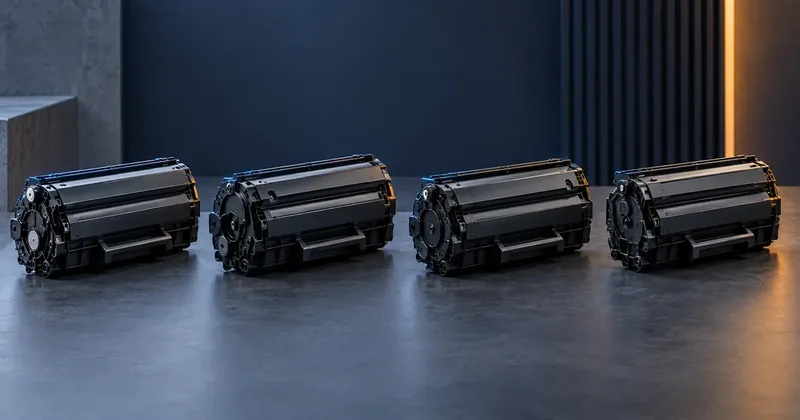
Magnetic toner, verified calibration, and certified fonts are all required for MICR printing. You can confirm the first by looking. The other two are invisible from the outside, which is why they are the ones that fail quietly.
A rejected check costs a bank exception fee, internal time to reconcile it, the work of reissuing it, and, in payroll, a conversation with somebody who was not paid. Typical MICR toner rejects at 2% to 4%, which on a run of 10,000 items is 200 to 400 of them.
The full process for moving from pre-printed checks to blank stock: what the paper has to meet under ANSI X9.18, what makes a printer MICR capable, how the run is laid out and ordered, and how the output is verified before it leaves.
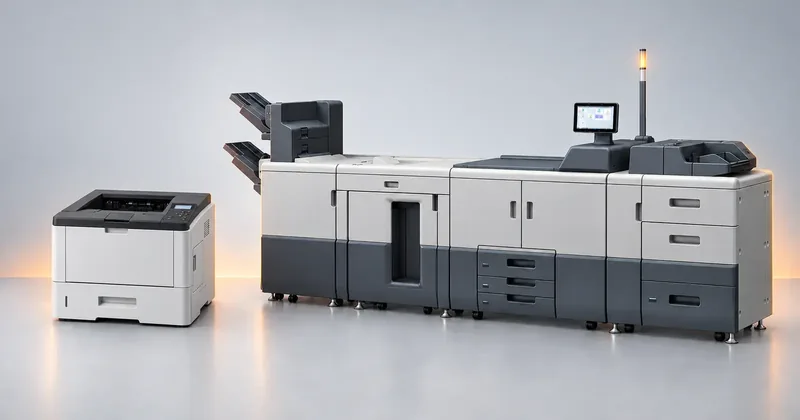
Printer datasheets publish two monthly page figures that mean different things. The recommended monthly volume is the planning number. The maximum duty cycle is a ceiling, and sizing a check operation against it is the most common mistake we see.
Vendor-neutral questions, arranged so the answers separate serious suppliers from resellers faster than a feature comparison. Includes what a good answer sounds like for each.
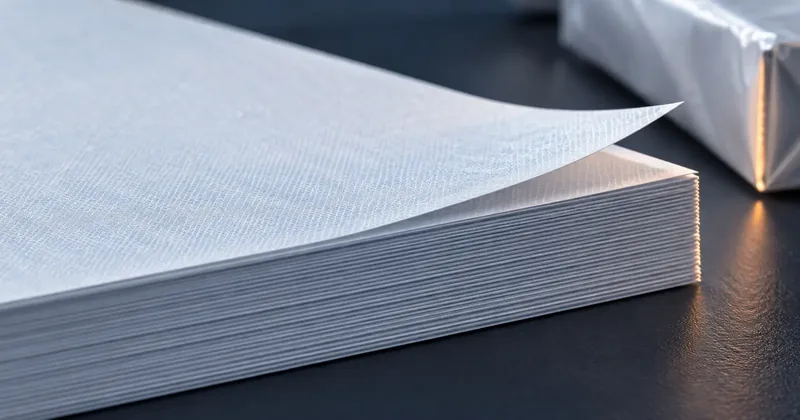
ANSI X9.18 governs check stock and sets five requirements: 24 lb weight recommended, Sheffield smoothness of 120 to 150, moisture content of 4.5%, sealed moisture-proof wrapping, and paper containing no ferromagnetic material. The last one is the one buyers rarely ask about.
Signal strength is a property of the assembled machine, not of the toner alone. That single fact is why we formulate toner per engine instead of shipping one universal MICR product.
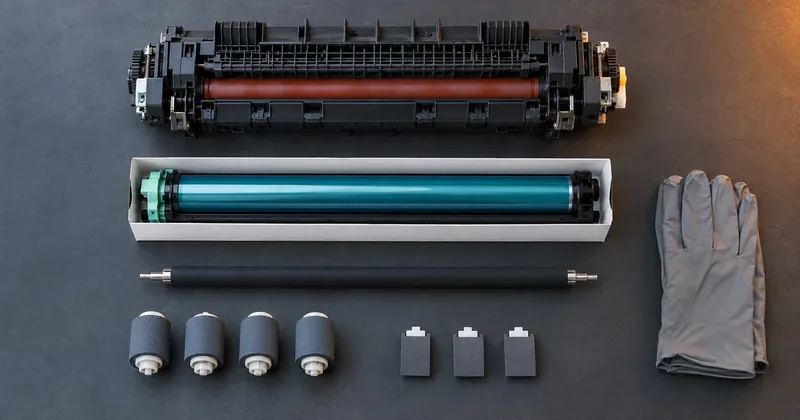
A maintenance kit replaces the fuser, photoconductor drum, transfer roller, pickup rollers, and separation pads. This explains where each part sits on the paper path and what its wear does to the printed item.
An IRD is a paper substitute with the legal standing of the original check. It carries its own MICR line derived from the original item, which is exactly why an IRD cannot be produced on pre-printed stock.