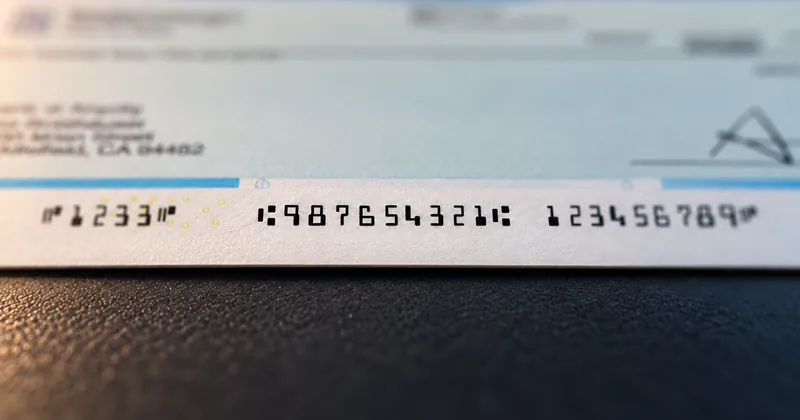
How a reader/sorter turns a magnetic waveform into a digit
A reader/sorter never looks at a digit. It magnetizes the line, traces the signal each character makes, and matches the trace to the standard, or rejects the item.
Read itHow the technology works, in plain terms.
A reader/sorter never looks at a digit. It magnetizes the line, traces the signal each character makes, and matches the trace to the standard, or rejects the item.
Read itThe four E-13B symbols are the punctuation of the MICR line. They carry no value, but they tell the reader/sorter where every field starts and stops.
Read itE-13B has ten digits that carry the data and four symbols that mark the fields. Each of the fourteen is shaped for the magnetic waveform it makes, not for its looks.
Read itA reader/sorter magnetizes the ink on the bottom line of a check and compares the waveform against a standard. Here is how that read works, what the line carries, and why a magnetic read survives handling that would defeat an optical one.
Read itMagnetic toner, verified calibration, and certified fonts are all required for MICR printing. You can confirm the first by looking. The other two are invisible from the outside, which is why they are the ones that fail quietly.
Read it