
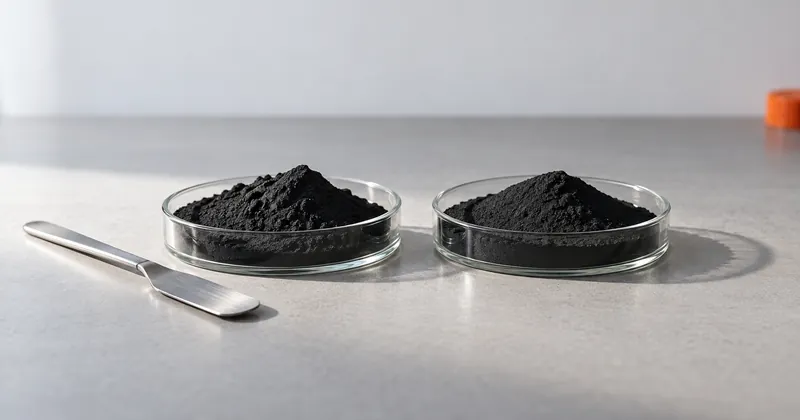
The base is the material that holds a toner together, and it decides two things that matter at the bank: how well the particles cohere, and how the printed character stands up to heat. Most MICR toner is built on polystyrene. ProMark™ MICR toner is the first polyester-based MICR toner in the industry, and polyester holds together and tolerates heat better, which is what a reader/sorter tests.
Toner is usually discussed as if it were one substance. It is a blend. The ingredient that makes MICR toner magnetic is iron oxide, which gives each character its magnetic signature. When people compare MICR toners, that is the side they compare. The base gets far less attention, even though it is the part that decides how the character behaves once it has left the printer.
Two jobs the base is responsible for
The iron oxide supplies the signal. It does not hold the character in shape. The base does that, from the moment the fuser fixes the toner to the paper until the item has been read for the last time. That gives the base two responsibilities that show up directly in a reject report:
- Cohesion: the ability of toner particles to hold onto each other. We test every ProMark formulation for it, and the polyester base is what improves it.
- Heat tolerance: a reader/sorter is a hot, fast, mechanically aggressive place for a printed character to survive, and the base decides whether the character holds together through it.
Polystyrene is the base most MICR toner uses. Polyester gives stronger cohesion properties and withstands the higher temperatures inside a bank reader/sorter. Stated plainly, the toner holds together where other toner begins to break down, so the magnetic signal on the line survives the trip.
Why heat is the test that counts
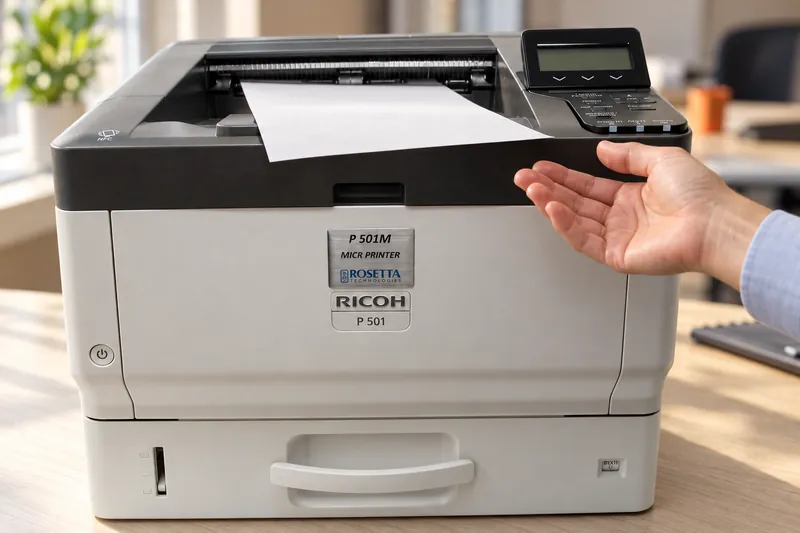
A printed check meets heat twice. The first time is in the printer, where the fuser fixes the toner to the paper with heat and pressure. That heat is known in advance, and the toner is formulated for the engine that applies it. The second time is outside your building, inside the reader/sorter at the bank, where nobody on your side controls the conditions.
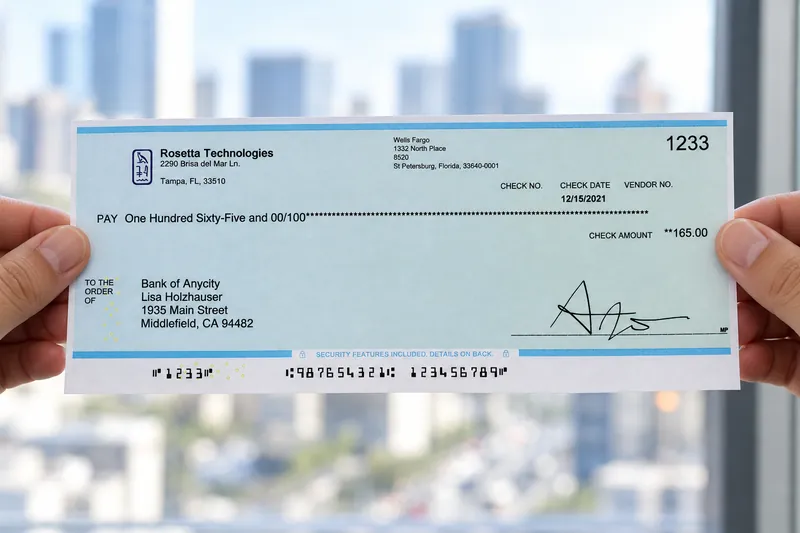
A character that begins to break down there does not simply fade. In E-13B, shape is not cosmetic. Each character carries a deliberately uneven distribution of mass, and that distribution is what produces its distinct waveform at the read head. A character that has lost part of its structure produces a different waveform, and the reader/sorter either misreads it or cannot resolve it with confidence.
Either way the item leaves straight-through processing. A person at the bank handles it, and the bank charges for that handling at its own fee schedule. The check looked perfect when it left your office, which is exactly why this kind of failure is so hard to trace back to the toner.
It also explains a pattern many finance teams recognize without being able to name. The rejects are intermittent. Most items clear, a few do not, and every rejected item looks fine to a person holding it. When the cause sits in how the toner behaves under heat and handling at the bank, inspecting your own output by eye will never find it. A measurement will, and so will a toner that does not break down in the first place.
What the base does not do on its own
A polyester base is not a reject rate by itself. The signal a reader/sorter reads comes from the whole machine, with the engine and the fuser as much a part of it as the toner. That is the reason we formulate toner for each print engine rather than shipping one universal product, and the reason each printer is checked on a MICR verifier before it leaves us.
Nor does the base replace maintenance. Cohesion is about toner particles holding onto each other. Adhesion, the toner holding onto the paper, depends on the fuser, and when a fuser degrades, adhesion degrades with it. A polyester toner run through a worn fuser is still a toner run through a worn fuser.
The base and the per-engine formulation together are what we put a number on. ProMark MICR toner is independently tested at a reject rate of 0.1% or lower on an IBM 3890 high-speed reader/sorter. Typical MICR toner in this industry rejects at 2% to 4%.
Questions to put to any MICR toner
None of this is visible on the page, so it has to be asked. These four questions take a minute and separate a formulation from a commodity:
- Is the base polystyrene or polyester?
- Was the toner formulated for this specific print engine, or sold as one product across many?
- What reject rate was it tested at, on which reader/sorter, and by whom?
- Is it an approved supply under the printer's performance guarantee? Approved supplies are one of the five conditions of our MICR Performance Guarantee.
Our own answers are on the ProMark MICR toner page. Cohesion, the property the polyester base improves most directly, has a post of its own on what happens when toner particles stop holding onto each other.
The 0.1% figure is a tested reject rate, not a promise of zero rejects. The guarantee pays bank fees above your bank's acceptable rate where our materials caused the reject, under five conditions that apply together.