Solutions by operation

Seven operations, seven different answers

A bank running a nightly production cycle and a finance team printing four hundred checks a month both need MICR. They do not need the same equipment, the same software, or the same conversation.

Every recommendation on these pages starts from your monthly volume. A model is suggested because your peak month sits inside its recommended volume, not because it sounds like a fit.

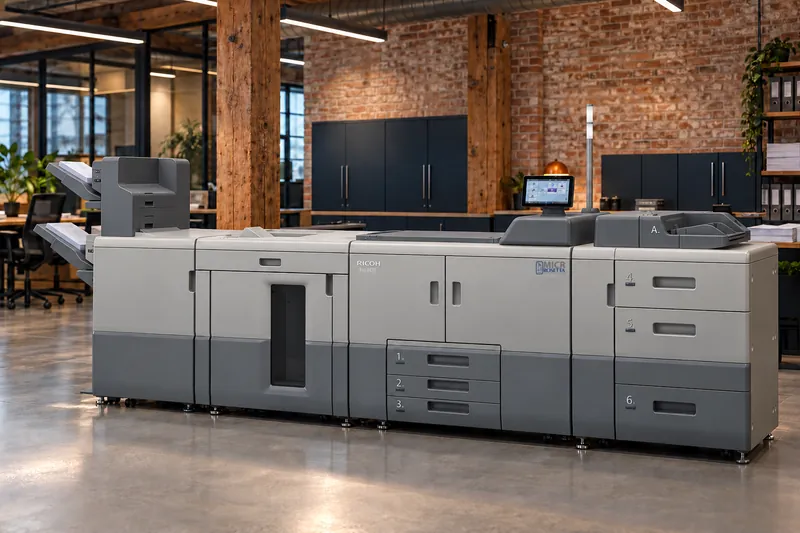
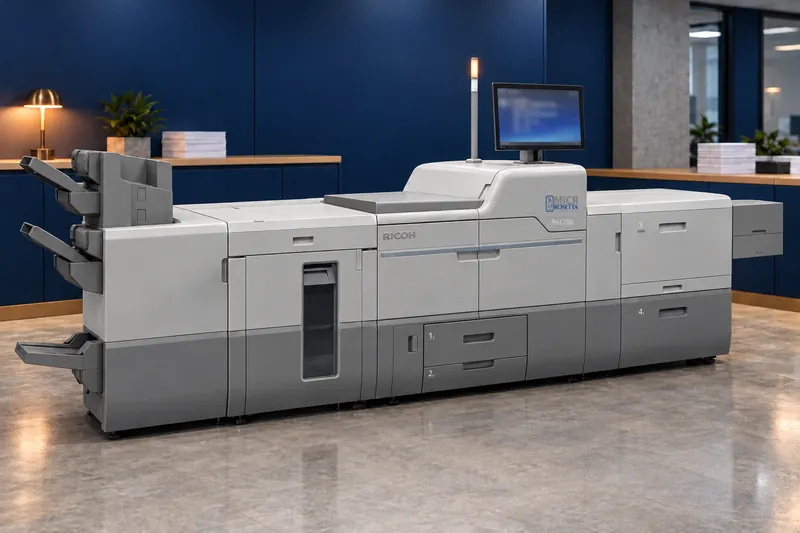
A Pro C7500PM five-color production MICR system in a bank operations center
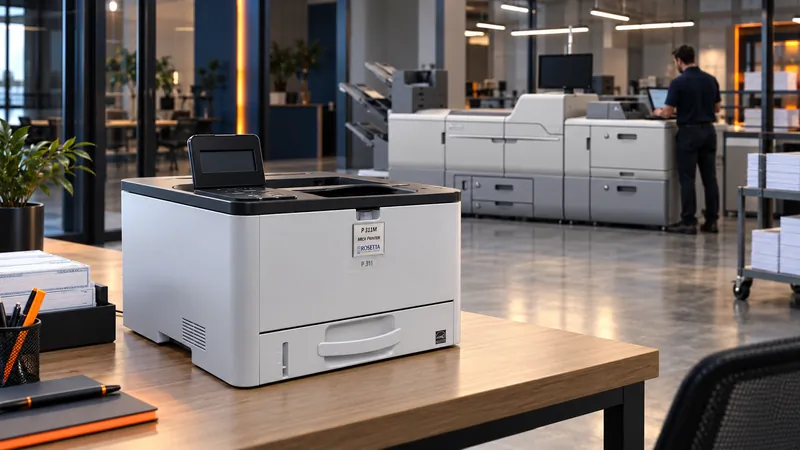
A P 311M desktop MICR printer on a desk in the foreground, and a production MICR system with its operator across the print room behind it

Size on volume, not on speed

P 311M
Up to 5,800 prints per month
P 501M
Up to 10,000 prints per month
SP C840DNM
Up to 50,000 pages per month
IP C8500M
Up to 50,000 prints per month
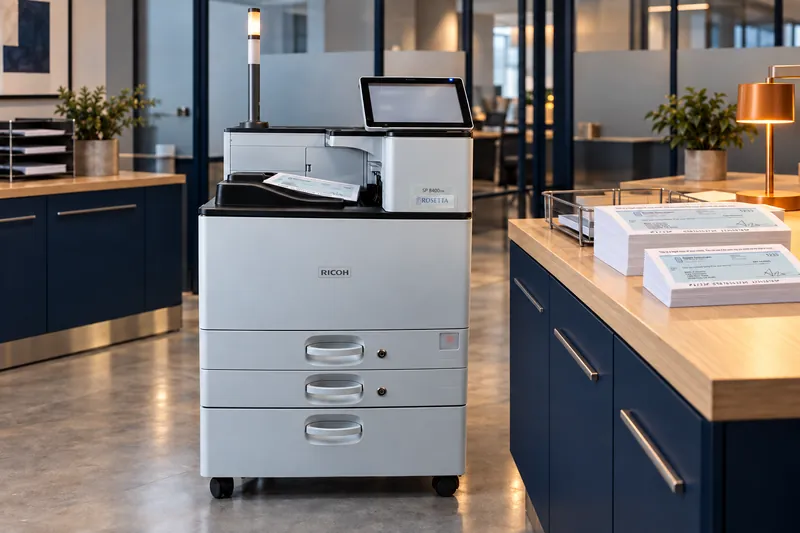
SP 8400DNM
Up to 53,000 pages per month
Pro C7500PM
Up to 240,000 pages per month
Pro C7210XM
Up to 240,000 pages per month
Pro 8410M / 8420M
Up to 1,000,000 impressions
Pro 8310M / 8320M
Up to 1,000,000 impressions

Recommended monthly volumes. The IP C8500M, Pro 8410M / 8420M and Pro 8310M / 8320M figures are maximum monthly volumes. Maximum duty cycle is a survival rating. Running near it wears the fuser and drum, and worn parts weaken the MICR signal.

Start with the number

Monthly volume decides the hardware

Speed is the figure vendors lead with. Recommended monthly volume is the figure that decides whether a machine lasts and whether its MICR line stays inside tolerance. Plan against it rather than against the maximum duty cycle, which describes a limit rather than a workload.

Printer classes by recommended monthly volume
Published monthly volume Class Models Notes
Up to 10,000 a month Desktop P 311M, P 501M 34 to 45 pages per minute
Up to 53,000 a month Workgroup SP 8400DNM, SP C840DNM, IP C8500M 45 to 60 pages per minute
Up to 240,000 a month Production Pro C7500PM, Pro C7210XM Color plus MICR
Up to 1,000,000 a month Production Pro 8410M/8420M, Pro 8310M/8320M 111 to 136 pages per minute
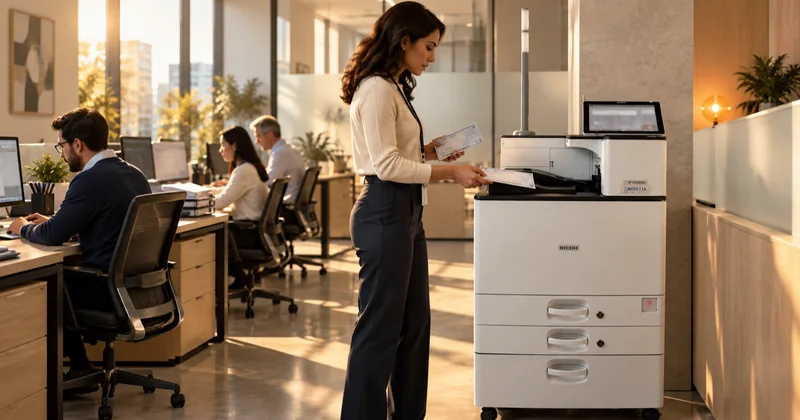
A government finance office with institutional furniture and a service counter behind, one member of staff collecting printed output from a workgroup printer while another works at a desk

Public sector finance offices are a fifth segment, with the same requirements and a longer procurement.

By operation

Find the one that matches how you work

A Pro C7500PM five-color production MICR system in a bank operations center
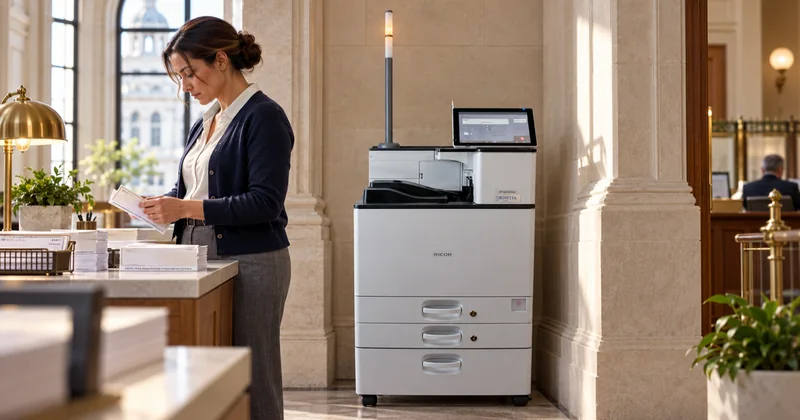
Banks and financial institutions

Banks and Financial Institutions

A bank is the one buyer that sits on both sides of the MICR line. It prints items that have to clear, and it receives items that have to be read, returned, and replaced. Both jobs run on a clock that does not move.

  • A nightly cycle with no slack
  • Items that a reader/sorter accepts
  • Return items that must be replaced
See the fit
A Pro 8420M production MICR system in a payroll department in a converted brick and timber building
Payroll and insurance claims

Payroll and Insurance Claims

Payroll and claims work is defined by its deadline. The run is large, it happens on a date everyone already knows, and every rejected item is a person who did not get paid on the day they expected to be.

  • A date that does not move
  • Rejects measured in people
  • One blank stock for every account
See the fit
A claims operation with staff at monitors along a long desk, printed output accumulating in trays between them, and a workgroup MICR printer at the end of the run
Healthcare payers and providers

Healthcare Payers and Providers

A healthcare payment is rarely just a check. It arrives with remittance detail the provider has to reconcile against claims, and the two have to stay together from the printer to the envelope.

  • The payment and the detail are one job
  • Nothing pre-printed to secure
  • A cycle, not a deadline
See the fit
A government finance office with institutional furniture and a service counter behind, one member of staff collecting printed output from a workgroup printer while another works at a desk
Government and education

Government and Education

A city finance office, a school district and a university bursar are running the same job: scheduled disbursements that cannot be late, paid to people who are not set up for electronic payment, under a purchasing policy that has to be satisfied before anything is bought.

  • One blank covers every fund and account
  • Nothing negotiable in a storeroom
  • A fixed date needs a response time
See the fit
Finance staff member printing checks on a desktop MICR printer in an office
Small and mid-size business

Small and Mid-Size Business

Below a certain volume the question is not throughput. It is whether a finance team should be storing, securing, counting, and destroying pre-printed check stock for every account it holds.

  • Stop holding stock per account
  • Nothing of value sitting in a drawer
  • A reject still costs the same
See the fit
An SP 8400DNM MICR printer in a returns processing room, printed Image Replacement Documents in its output tray and on the counter
Service bureaus and commercial printers

Service Bureaus and Commercial Printers

A commercial printer or mailing house is not printing its own checks. It is printing other organizations' checks, which changes the problem: many accounts, many templates, other people's deadlines, and a reject that is your fault and their money.

  • No minimum volume
  • Many accounts, one blank
  • Nothing negotiable on the shelf
See the fit
An SP 8400DNM MICR printer in a returns processing room, printed Image Replacement Documents in its output tray and on the counter
Check return and IRD teams

Check Return and IRD Teams

A return item arrives as a record in a cash letter file. It leaves as a physical document that carries its own MICR line, or it does not leave at all and somebody works it by hand.

  • Files in, documents out
  • Decisions that do not need a person
  • An IRD carries its own MICR line
See the fit
What does not change

The three requirements are the same at every size

Magnetic toner, a printer calibrated and verified on a MICR verifier before it ships, and certified E-13B or CMC-7 fonts tuned to that engine and toner. All three together make a printer a MICR printer. A standard office printer loaded with MICR toner satisfies one of the three, which is why its output still gets rejected.

The reject rate is where the difference shows up on an invoice. ProMark™ MICR toner is independently tested at a 0.1% reject rate or lower. Typical MICR toner in this industry rejects at 2% to 4%. A bank charges for rejects over its acceptable rate whether the operation prints four hundred items a month or four hundred thousand.

Get in touch

Tell us what your operation prints

Tell us your monthly volume and what you are running now. That is enough for a real answer rather than a brochure.

We use this to reply to you. Nothing else. See privacy.