
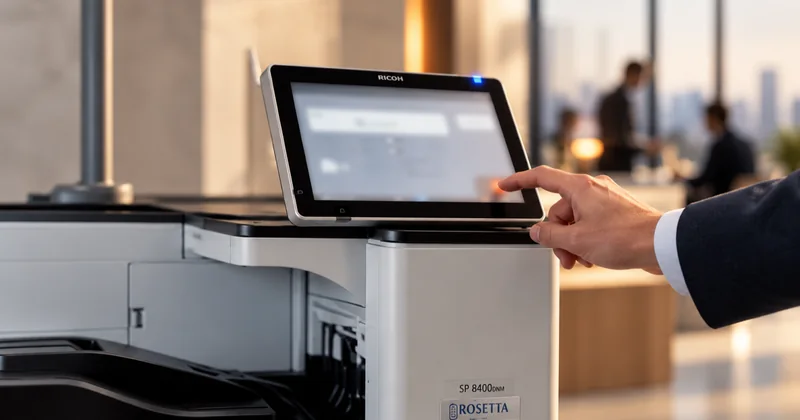
The three requirements
Magnetic toner, calibration, and certified fonts. Each one is necessary and none is sufficient. A machine that has two of the three produces output that looks right to a person and is rejected by a reader/sorter.
Magnetic toner
Iron oxide in the toner is what gives the characters a magnetic signature. This is the requirement everyone knows about, and it is the reason the misunderstanding is so common: buying MICR toner feels like it should be the whole job.
Calibration
Signal strength is a property of the assembled machine, not of the toner alone. The engine, the fuser temperature, the transfer roller, and the toner all contribute. A MICR printer is verified on a MICR verifier before it ships, which measures the signal the machine actually produces and confirms it falls inside tolerance.
This is the requirement that cannot be bought separately and cannot be inspected by eye. It is also the one that drifts over time as parts wear, which is why maintenance is treated as part of the system rather than as housekeeping.
Certified fonts
E-13B or CMC-7 fonts tuned to that engine and that toner. Font files that resemble the standard but were not built to it produce characters with the wrong mass distribution, and therefore the wrong waveform. The output is legible to a person and wrong to a machine.
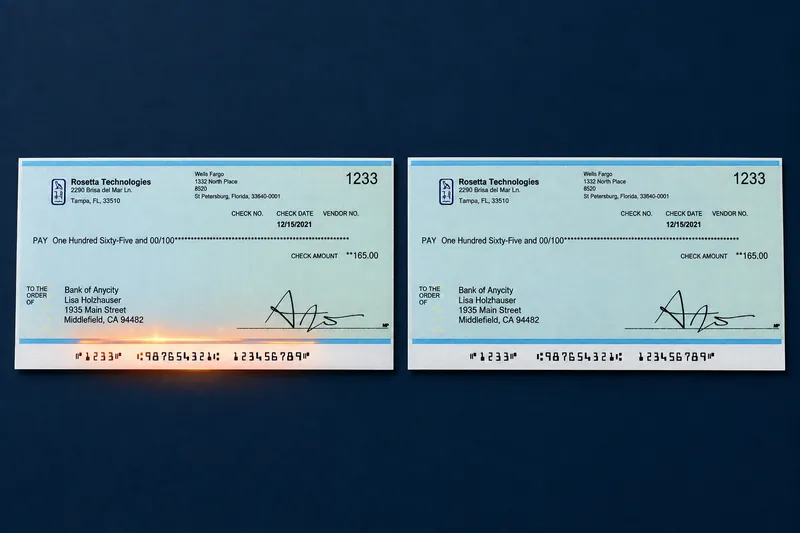
What makes a printer a MICR printer
- Magnetic tonerIron oxide gives the characters a magnetic signature.
- CalibrationProduction verified on a MICR verifier before it ships.
- Certified fontsE-13B or CMC-7, tuned to the engine and the toner.
All three present, and the item clears. The reader/sorter reads the line. With only the toner, the check looks right to a person and is rejected by the machine.
Re-engineered engines rather than proprietary hardware
We re-engineer proven Ricoh print engines into MICR-capable hardware rather than manufacturing proprietary printers from scratch. That is a deliberate choice, and it has consequences worth understanding before comparing vendors.
The engine underneath is a machine that service organizations already know, with a parts supply that exists independently of any one MICR vendor. What we build is the MICR path: the toner formulation for that engine, the calibration, the fonts tuned to the pair, and the supplies that keep the signal inside tolerance.
The practical effect is that the part of the machine most likely to need service is ordinary, and the part that is specialized is the part that actually distinguishes a MICR printer.
Choose by monthly volume, not by speed
Speed is the figure vendors lead with because it is the easiest to compare. Recommended monthly volume is the figure that decides whether a machine lasts and whether its MICR line stays inside tolerance over its life.
Duty cycle figures are higher than recommended volumes and describe a limit rather than a sustainable workload. Planning a monthly cycle against a duty cycle is the most common sizing mistake in this category.
| Model | Speed | Recommended monthly volume |
|---|---|---|
| P 311M | 34 ppm | Up to 5,800 prints |
| P 501M | 45 ppm | Up to 10,000 prints |
| SP C840DNM | 45 ppm, color | Up to 50,000 pages |
| IP C8500M | 45 ppm, color | Up to 50,000 prints |
| SP 8400DNM | 60 ppm | Up to 53,000 pages |
| Pro C7500PM | Five-color production | Up to 240,000 pages |
| Pro C7210XM | 95 ppm, color | Up to 240,000 pages |
| Pro 8310M / 8320M | 111 or 136 ppm | Up to 1,000,000 impressions |
| Pro 8410M / 8420M | 111 or 136 ppm | Up to 1,000,000 impressions |
Recommended monthly volumes, except the Pro 8300 and Pro 8400 series and the IP C8500M, which show maximum monthly volume.
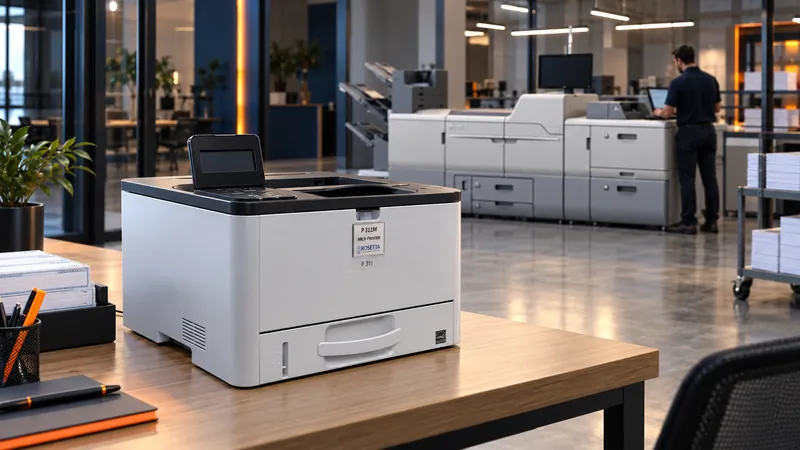
Size on volume, not on speed
- P 311M
- Up to 5,800 prints per month
- P 501M
- Up to 10,000 prints per month
- SP C840DNM
- Up to 50,000 pages per month
- IP C8500M
- Up to 50,000 prints per month
- SP 8400DNM
- Up to 53,000 pages per month
- Pro C7500PM
- Up to 240,000 pages per month
- Pro C7210XM
- Up to 240,000 pages per month
- Pro 8410M / 8420M
- Up to 1,000,000 impressions
- Pro 8310M / 8320M
- Up to 1,000,000 impressions
Recommended monthly volumes. The IP C8500M, Pro 8410M / 8420M and Pro 8310M / 8320M figures are maximum monthly volumes. Maximum duty cycle is a survival rating. Running near it wears the fuser and drum, and worn parts weaken the MICR signal.
The three classes
Workgroup
Desktop and departmental machines, from a single desk up to a shared finance team. The P 311M and P 501M are desktop units. The SP 8400DNM and SP C840DNM are larger floor-adjacent machines with stacked trays and a color touch panel. The IP C8500M is a four-color console printer with a 7 inch touch panel, for up to 50,000 prints a month.
Production
High-volume, mission-critical output. The Pro C7500PM and Pro C7210XM add color at production speeds. The Pro 8310M/8320M and Pro 8410M/8420M are the monochrome production systems, running at 111 or 136 pages per minute.
Why maintenance is part of the specification
The parts that wear are the parts that decide print quality. A maintenance kit replaces the fuser, the photoconductor drum, the transfer roller, the pickup rollers, and the separation pads.
Fuser condition affects how well toner bonds to the sheet, and toner adhesion affects signal strength. That is the mechanical chain from a worn part to a rejected item, and it is why continuous maintenance under an approved service plan is one of the five conditions of the MICR Performance Guarantee rather than a recommendation.
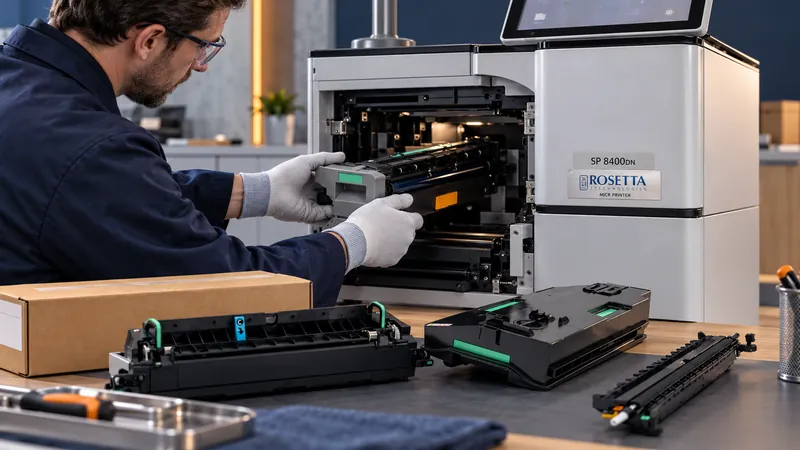
The paper path: where a kit replaces parts
- Pickup rollersFeed stock from the tray.
- Separation padsKeep tension. Worn pads jam.
- Photoconductor drumCarries the image.
- Transfer rollerMoves toner to the sheet.
- Fuser assemblyFuses toner into the stock.
The fuser is the part tied most directly to toner adhesion, which is one of the five criteria every ProMark formulation is measured against.
What is in a maintenance kit
Fuser assembly
Bonds toner to the sheet.
Drum unit
Carries the image to the page.
Transfer roller
Moves toner to paper.
Pickup rollers
Feed stock from the tray.
Separation pads
Tension the sheet. Worn pads jam.
Waste toner bottle
Collects what is not transferred.
Common questions
Can a regular printer be converted to MICR?
No. Magnetic toner is one of three requirements. The machine also has to be calibrated and verified on a MICR verifier so its signal strength falls inside tolerance, and it needs certified E-13B or CMC-7 fonts tuned to that engine and that toner.
What does calibration actually measure?
The magnetic signal strength the assembled machine produces, measured on a MICR verifier. Signal strength depends on the engine, the fuser, the transfer path, and the toner together, so it has to be measured on the finished machine rather than inferred from the toner specification.
Should I size a printer by speed or by volume?
By recommended monthly volume. Speed decides how long a run takes. Recommended volume decides whether the machine lasts and whether its MICR line stays inside tolerance. Duty cycle figures are higher and describe a limit rather than a workload.
Why do you use Ricoh engines?
Re-engineering proven engines rather than manufacturing proprietary hardware means the underlying machine is one service organizations already know, with an independent parts supply. What we build is the MICR path: toner formulated for that engine, calibration, and fonts tuned to the pair.
How often do maintenance kits need replacing?
Each printer has a per-kit page yield rather than a time interval, so the interval depends on how much a given machine prints. Contents also vary per printer.
Does a color MICR printer print the MICR line in color?
No. The MICR line is printed in magnetic toner, which is black. A color MICR printer prints the rest of the item in color and the MICR line in magnetic black in the same pass.
Talk it through with someone who builds these
We supply the printer, the software, and the toner, which is what makes the MICR Performance Guarantee possible at all. If any part of this applies to what you are trying to do, the fastest route is a conversation.